

Wall-Mounted vs. Tabletop Display Cases: Which One’s Right for Your Collection?
Most people start this decision by looking at their walls. Empty wall, mount something. Open table or console, put a case there.
We’d start somewhere else: with the collection itself. What you collect, how big the pieces are, whether you’ve got five of them or fifty, whether you want everything on display or just your favorites — that tells you far more than measuring empty space ever will. Space still matters, just later, once you know what you’re actually trying to fit into it.
And sometimes the honest answer isn’t one or the other. It’s both.
Start with what you actually collect
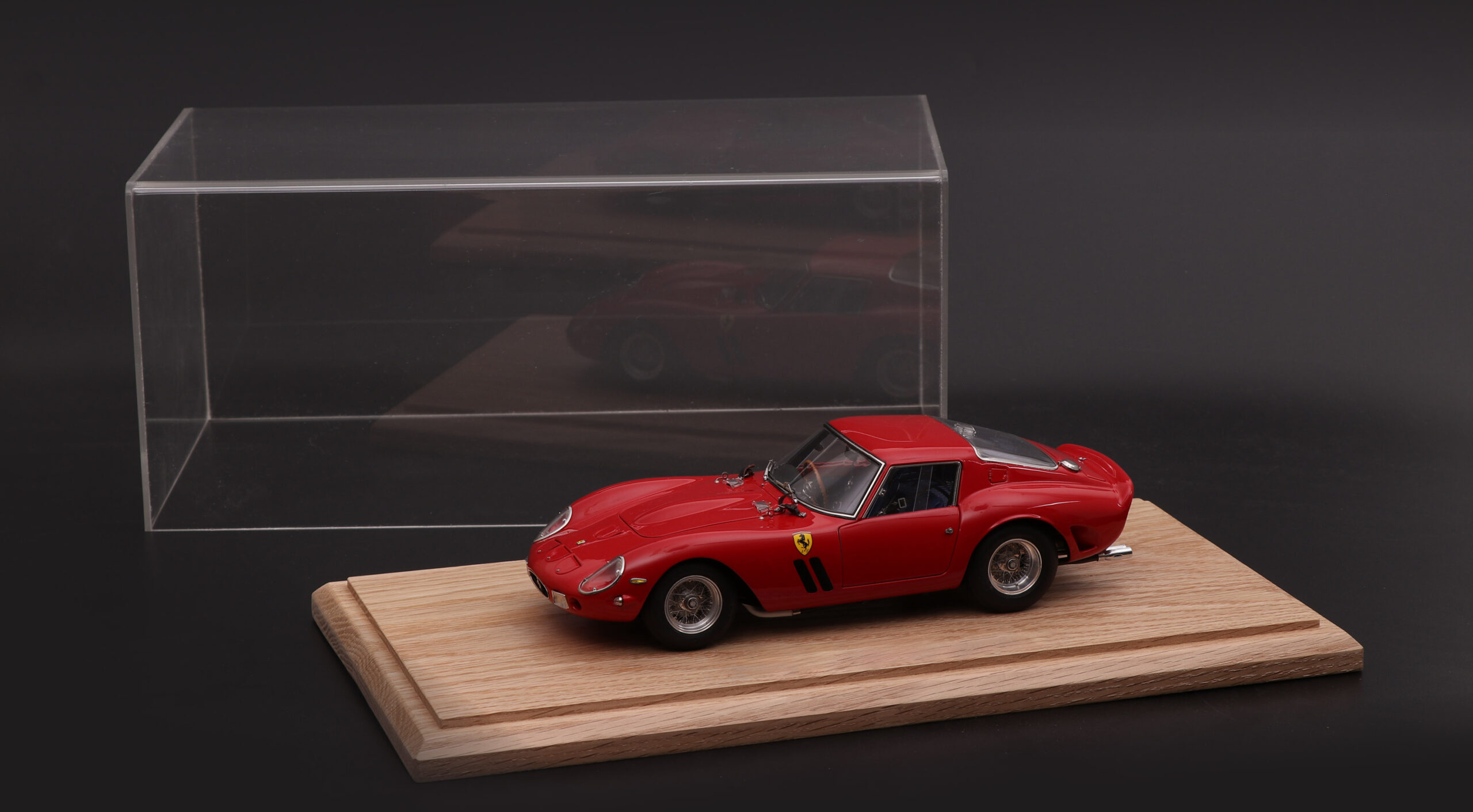
A small collection, or a handful of pieces you’ve deliberately chosen, does well in individual tabletop cases. Each one gets to be its own focal point instead of one item in a crowd.
Once a collection starts getting larger — especially if the individual pieces aren’t small — tabletop cases can start eating up a lot of surface area fast, and that’s usually when the wall starts looking more appealing.
It’s also worth thinking about where the collection is headed, not just where it is. Six pieces today and a case sized for exactly six can feel cramped in a year if you’re the type who keeps adding to it. That doesn’t mean buy the biggest display you can find — it just means factor in where this is going, not only where it stands right now.
Where tabletop cases earn their keep
The biggest thing a tabletop case gives you is access. If there’s a piece you like picking up, turning over, photographing, or just looking at from every angle, a tabletop case tends to make that kind of interaction particularly easy.
They’re also good for the piece that matters more than the others — not necessarily the most expensive one, just the rare find, the sentimental one, the thing you’re still excited about six months after buying it. Giving it its own case is a way of saying “look at this one.”
One thing we genuinely like doing: treating the tabletop spot as a rotating feature. Keep the bulk of the collection together elsewhere, and swap whatever’s on the tabletop every so often. It keeps things feeling current without touching the rest of the setup.
Where wall-mounted cases earn theirs
Wall displays start pulling ahead once a collection gets big enough that you’d otherwise be hunting down tables, shelves and console space to hold it all — using a stretch of wall that was probably doing nothing anyway.
But the advantage we like more is what it does for organization. A wall lets you group things that belong together: one case for the Star Wars LEGO®, the case next to it for the vintage sets. Model cars split naturally by manufacturer, era, or racing series. Sports memorabilia by team or by player. Figures by franchise.
Instead of a wall of stuff, you end up with a wall of themes — and every time the collection grows enough for a new theme, you just add another case.
Lighting is what makes it feel like part of the room
Lighting is something you tend to see more often in larger wall-mounted displays than in smaller tabletop cases. On a wall display, it can do real work — pulling out details that get lost across several shelves and changing how the whole display feels in the room. On a bigger wall display, it does real work — pulling out detail that gets lost across several shelves, and changing how the whole thing reads in the room.
A wall of model cars or figures, grouped into themes and lit even a little, stops looking like storage and starts looking like something you built on purpose.
How much of a presence do you actually want it to have
This is less about which room has space and more about how loud you want the collection to be in that room. A single tabletop case with one favorite piece sits quietly in a living room. A dozen model cars across a lit wall display does the opposite — it becomes the room.
Neither is wrong. A dedicated office or hobby room can carry a lot more presence than a shared living space can. And for what it’s worth, the amount of collection you’re happy with taking over your office and the amount your partner is happy with taking over the living room are not always the same number. Compromise is part of the job here too.
The same question applies to how you actually use the collection day to day. If you’re regularly handling a piece, inspecting it, or photographing it, that pulls toward tabletop. If most of it is something you enjoy by looking rather than touching, a wall of pieces organized together tends to make more sense. Neither habit is more “correct” — just be honest about which one is actually you.
Give a growing collection some slack
If your collection changes often — new pieces in, older ones sold or rotated out — build in more room than you need today. A larger wall display makes that easy: no hunting for a new tabletop spot every time something arrives, and groups can be reshuffled as the collection evolves.
Bigger isn’t automatically better, though. A little breathing room around each piece usually makes the whole thing look more considered; packing every inch tends to make even a great collection look cluttered. The goal isn’t maximum density — it’s enough slack that the next piece doesn’t force you to redo everything.
A quick word on weight
Worth mentioning, not worth losing sleep over: anything wall-mounted should be installed to its actual mounting spec, with the combined weight of the case and everything in it comfortably inside that limit. If you’re pushing close to it, that changes the math.
For most collections, though, as long as you’re comfortably within the display’s weight capacity and it’s properly mounted, weight probably doesn’t need to be the deciding factor. For a closer look at how we approach the design, prototyping and mounting of our cases, see how we design and build our display cases.
You don’t have to choose
For a larger collection, our favorite setup is usually a mix: most of it — grouped, lit, organized into themes — living on the wall, with one or two individual pieces pulled out for their own tabletop case.
Maybe it’s the rare one.
The sentimental one.
The one you’re most excited about right now.
Those tabletop pieces can rotate over time while the wall stays the steady, organized backbone of the collection. You get the scale of a wall display and the spotlight of a tabletop one, without giving up either.
Start with the collection you actually have, not the wall you happen to have available. Small or curated, tabletop probably wins. Larger or still growing, the wall usually does — especially once lighting and grouping come into it. And if you’ve got a mix of “a lot of pieces” and “a few that deserve their own moment,” there’s nothing wrong with building both.
Whichever format you choose, an enclosed case can also reduce how often the collection needs cleaning. We’ve written more about keeping collectibles protected from dust here.