

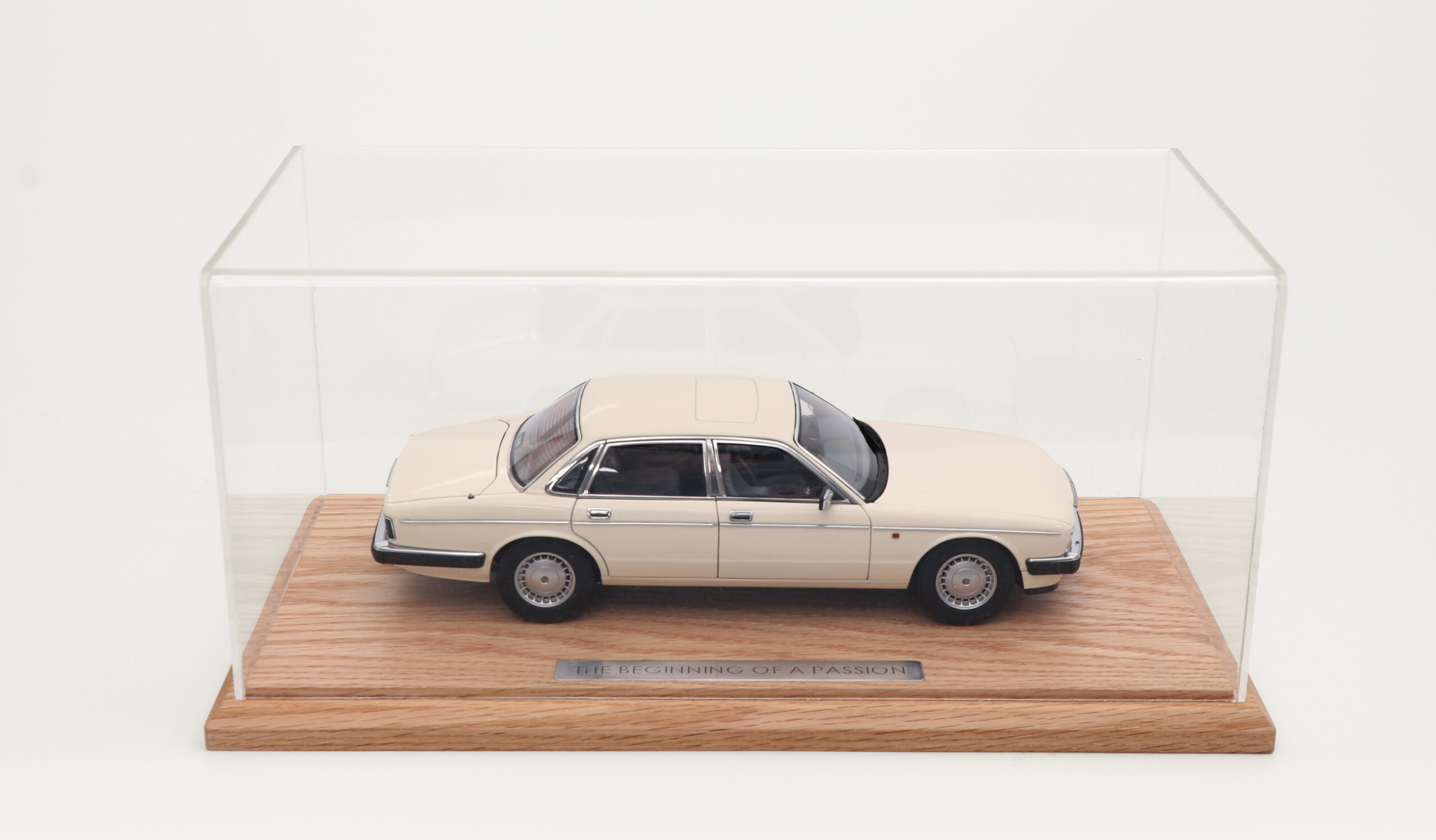
How Much Dust Protection Does Your Collection Actually Need?
Dust isn’t usually the thing that gets people into collecting, or the thing they think about early on. Something gets a little dusty, you wipe it off, and you move on with your day.
It’s later — once a collection has grown, or once you’ve got a few pieces with real detail to them — that dust starts to feel like more than a wipe-down. Intricate parts, small openings, textured surfaces, spots you can barely get a cloth into. That’s when it stops being a five-second job.
Not every piece in a collection needs to be babied. But keeping dust under control does make a collection easier to live with, safer to handle, and honestly just nicer to look at.
Dust doesn’t stay on the surface
With model cars specifically, we’ve noticed dust never just sits where you’d expect. It works its way into the interior, around the wheels, into the vents, into every gap a hood scoop or side mirror creates. The more detail a piece has, the more places dust has to hide.
That’s not just a model car thing. Detailed figures, sports memorabilia, electronics, vintage pieces — anything with texture or moving parts ends up with the same problem, just in different spots.
Some collectibles are simply easier to clean than others. A LEGO® build, for example, may not have the fragile mirrors or antennas of a detailed model car, although its studs and small spaces can still collect plenty of dust.
Cleaning is often when the damage happens
Here’s the part nobody warns you about: the cleaning itself is usually riskier than the dust ever was.
We’ve done this to ourselves more than once — dusting a car, getting a little too casual about it, and catching a mirror or an antenna with the cloth. Nothing dramatic, just a snapped piece that didn’t need to snap.
That’s not an argument against cleaning. It’s an argument for cleaning less often, and more carefully, when you do. Fewer thorough cleanings means fewer chances to bend, scratch, or knock something loose — and some pieces genuinely aren’t easy to clean without partially taking them apart, which is its own risk.
What actually helps
A few tools make this a lot less nerve-wracking:
- A clean microfiber cloth for the big, flat surfaces
- A soft makeup or detailing brush for the small stuff — it gets into gaps without any real pressure
- An air blower with adjustable power — full blast is fine for something sturdy, but you want the option to dial it way down around antennas, mirrors, and anything delicate
- A clear, uncluttered space to work in while the piece is out of its case
The tool matters less than matching it to what you’re cleaning. And once you’re not worried about breaking something, cleaning stops feeling like a chore — you actually slow down and look at the piece while you’re at it.
A dusty shelf is a less enjoyable one
There’s a quieter reason to stay on top of dust that has nothing to do with preservation: it changes how you feel about your own collection.
Once something’s visibly dusty, you stop walking past it and enjoying it. You start walking past it and thinking “I need to deal with that.” Do that across an entire shelf and the thing you built to enjoy turns into a to-do list.
Keeping pieces enclosed changes that math entirely. What would be a weekly wipe-down on an open shelf can turn into something you do every few months instead — and at that point, cleaning stops being maintenance and starts being something closer to actually spending time with the piece: taking it out, looking it over, cleaning it properly, and putting it back looking its best.
Protected doesn’t have to mean packed away
Some collectors swing hard the other way — a piece stays in its original box indefinitely because that’s the only way to guarantee nothing ever happens to it. It’s protected, sure, but you barely see it.
We’d rather find the middle of that. An enclosed display gives a piece a real buffer — from dust, from a bumped elbow, from a kid running through the room — without shutting it away in a box in a closet. If you’ve ever watched a kid tear past something worth a few hundred dollars sitting out in the open, you know exactly the feeling a little extra barrier solves.
A case isn’t a vault. But it buys real peace of mind, and you still get to see the piece every single day, take it down whenever you want, and handle it without worrying you’re exposing it to more than it needs.
Finding what’s right for your shelf
None of this is one-size-fits-all. A sturdy piece with simple surfaces can sit out in the open indefinitely and be totally fine — especially if regular dusting doesn’t bother you. The calculation changes once you’re dealing with fine detail, fragile components, or spots you genuinely don’t want to clean often. An enclosed display can help considerably with dust, whether you choose a tabletop case or something mounted on the wall. If you’re deciding between the two, we’ve put together a guide to choosing between wall-mounted and tabletop display cases.
Some collectors want everything under glass. Some don’t mind a little dust. Most people land somewhere in the middle, and that’s fine — the right amount of protection is whatever fits how you actually want to live with your collection.
Whether it’s model cars, LEGO® builds, memorabilia, figures, or something else entirely, the goal isn’t a spotless collection. It’s one that’s easy to keep looking good, safe to actually handle, and — most importantly — still something you enjoy seeing every day, instead of something you’re quietly avoiding until the next cleaning session.